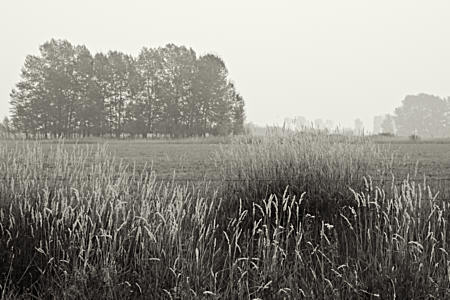
Here’s a curious tale for you: A week ago I was approached by someone interested in art collecting and in art blogging, and particularly in the interaction of the two. The C, as I shall call this beginning collector, put forward the interesting speculation that blogged artworks acquire “an aura of fame” that potentially makes them more salable. Whether that’s true or not, it probably doesn’t hurt the value of an artwork for it to be blogged.
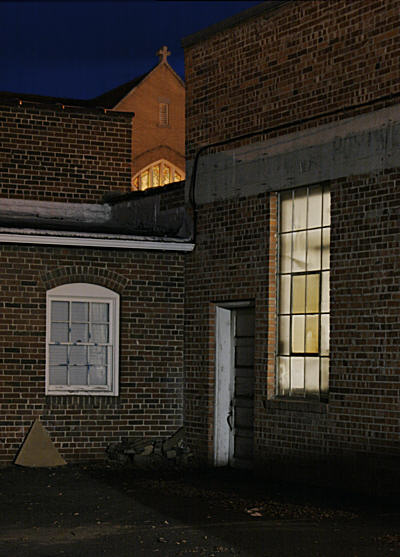
It happens that A&P had come to the C’s attention, and as a way of getting hirs feet wet, the C is considering buying perhaps half a dozen prints of images that have appeared in my posts. My prints are cheap; I’m sure I wouldn’t be writing this post if your paintings, linoleums, quilts, etc. were the same! (But maybe they’ll be next.) The C had good timing, in that just a few days ago I met with a local gallery owner who was enthusiastic about showing my work in her gallery. If that works out, my prices will have to go up, at least for work being sold by the gallery. (Also, the C didn’t know it, but I currently give an unadvertised 20% discount on purchases after the first.)
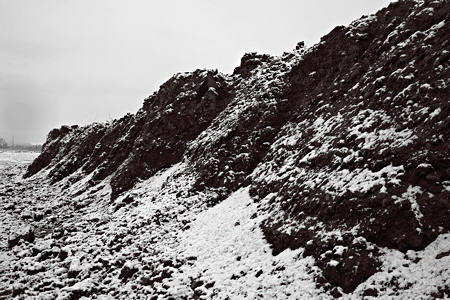
Now my posted images are a motley assortment, having been selected not necessarily for “quality” but to fit the subject of a post. It’s pretty clear my recent dirt piles bombed, and I won’t even mention the chocolate chip cookie fiasco. I suggested to the C that, if there’s wisdom in crowds, a good selection might be determined by the collective evaluation of you all (meaning ANY AND ALL readers, not only A&P contributors). The C was intrigued by this idea, and though not committed to abiding by your choices, I think s/he would be strongly swayed. S/he certainly hasn’t mentioned any favorites of hirs own yet.
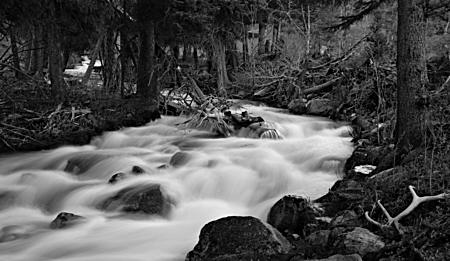
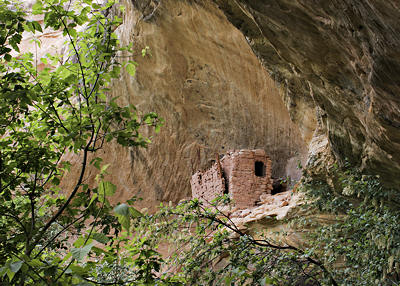
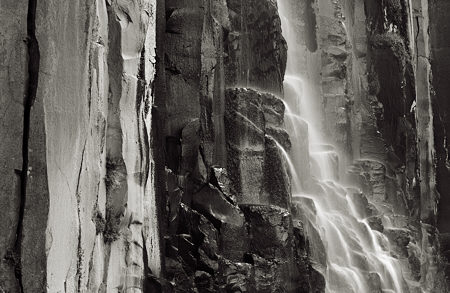
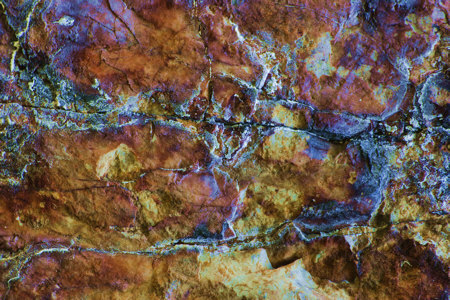
So, for convenience, I’ve compiled below the leading possibilities from each post (which you can revisit by clicking on the title; click on the image to enlarge it). For completeness, I also included in the text above two other images (call them A and B, respectively) that appeared on Mark Hobson’s blog, the landscapist. Please vote for any and all images you care to. Score each that you vote on as a 1, 2, or 3 for top tier, middle tier, lowest tier. Unscored images will be considered to rank somewhat lower. You may find it easiest to cut and paste this template
A B C D E F G H I J K L M N O P Q R S
inserting a 1, 2, or 3 after the letter of each image you want to evaluate.
I’ll do the same myself. I’m very curious whether there will be any consensus picks, and whether my choices resemble yours. Thanks for your help, and I’ll let you know how it all turns out. And of course, I invite comments or suggestions on the whole concept.
C: 41 views

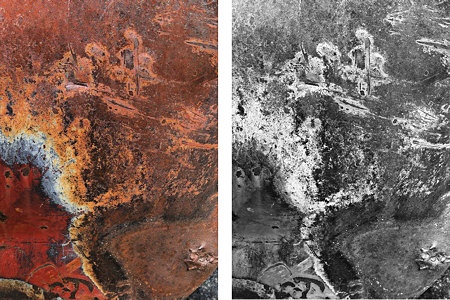
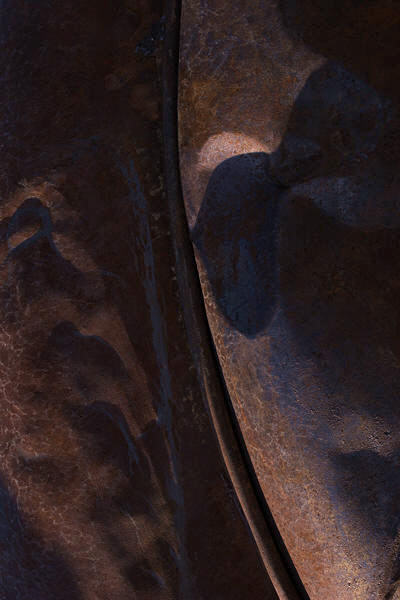

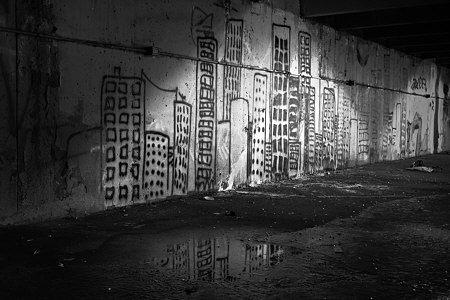


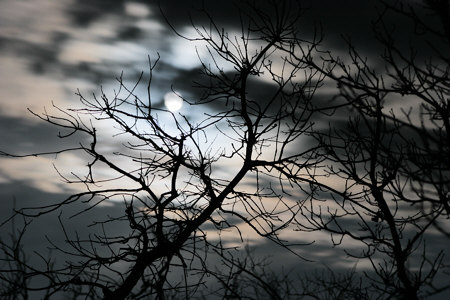


Steve,
I am excited that there promises to be a benefit for all the hard work that you have put into A&P.
I will be thinking about the ranking.
Steve, I’m just going to make a list of favorites, which I guess you could call my top tier:
C, H, M, N, P, R.
Also, if you give a collector an unadvertised discount, I think you absolutely should tell them you’re doing so. For two reasons. First of all, it keeps them aware of the retail price of the work. And secondly, it makes them aware that they’re getting special treatment, which will increase their commitment to what you’re doing.
I’m not sure that photos appearing on a blog in itself increases their value, but certainly anything that adds to the public’s awareness of your work can only help.
David,
Thanks for your list! As a true contrarian, you went for both the dirt pile and the cookie. I think I may be learning something useful about sales psychology…we’ll see if it works on D.
I certainly do tell buyers about the discount after they’ve indicated interest. The idea was to give them a possible incentive to buy more (it can be exercised at any time, and repeatedly) and to give them a form of privileged treatment they can enjoy even if they don’t use it.
I may sometimes be a contrarian, but in this case I don’t think I’m being one. All of the pieces I picked are ones that engage my imagination, in that that could be seen as one thing or as something else.
My favorites are
D, E, F, H, M, N, P, R.
Very interesting idea…making the list. my favorites or tier one would be
D E G P Q
discounts seem like reasonable incentives
I agree blogging increases exposure but I’m unsure of actual value…however, it certainly might follow that with exposure comes increase in value.
Steve,
Awareness for a piece of art (and definitely the artist) increases because it has been blogged about. It is definitely a great way to publicize the artwork in today’s world. In fact, this will be where the art world of tomorrow is headed. Most artists will have a blog where they will try and develop a central theme that will support the artwork they pursue and the reading public will peruse the artworks offered for viewing online before they go to see and feel the real thing. To some extent it is happening as we speak. I can get an armchair perspective of all prospective showings in and around town by just going online and checking out a dozen galleries and then decide where to go eliminating the aimless trudge…
My favorites were G, I, N, J, S. I like them more so because of the accompanying dormant story (when you had blogged about them) that awoke in my mind when I looked at the pictures. Another example where blogging helped…
My favorites (as they are now, not for their potential to grow into other things) are:
E, I , M, N, S
Of course I still love chocolate chip cookies :)
Sunil,
Thinking about it, I think you’ve touched on a key point: as stories or other memories get attached to artworks, they become more evocative for us and, other things being equal, more satisfying to own. Most buyers would like to know more about the artist and about how the work was made. Blogs offer exactly that when you can’t meet the artist in person, which is certainly the norm.
Furthermore, if comments are made on a work by others, the post constitutes something like a review, which is generally sought after by those with gallery shows. Maybe the C was more savvy that I gave hirm credit for.
Thanks for your choices. I’m glad somebody can stand my abstracts!
Thanks, Leslie. I just realized what a great marketing tool we’ve got here. I see that your tastes are more like Sunil’s than anybody else’s are (so far). So if he buys a photo from me sometime in the future, you’re the first other person I’ll offer it to. Cranking up the spam machine… Just kidding, of course. I suspect I’d quickly lose any good will I might have gained in other ways.
Steve,
Will you eventually tell us what your favorites are?
Birgit,
Sure, I doubt anyone will be influenced by my choices. Using the simplified approach of just selecting favorites, I prefer [ D F H N Q ]. This is very close to your selection, so I have to admire your taste!
Note to the C (I know you’ll read this sooner or later): in scientific experiments, one worries about controls and margins of error. To test your theory of blogged vs. non-blogged art, you should really purchase an equal number of photos from my web site that have NOT been blogged. I suppose I would have to agree not to blog about them in future — or even mention which ones they were. For you, I would do that. As a selection criterion, use your own judgement or let me pick for you. Also, to reduce the likelihood of random error in this study, the more images, the better, as any scientist will tell you. Just something to think about.
So far, six people voted:

Birgit,
That is cool.
Guess I’ll leave the pears to Hanneke (sigh).
Steve,
Here are my favorites, unsorted.
N
M
J
H
F
D
I’d like to cast a vote for Birgit’s graph as another one of my favorites.
Karl,
Thanks for your votes!
David,
Although Karl backed you up on J, you still have the distinction of being the only one to vote for an image that nobody else selected. Call it visionary. But Birgit’s graph is not eligible.
Steve and Sunil,
I find the memories I attach to some photos to be very strong. For each photo, I can remember what I was doing when I saw it, and where I was.
If we think about what Ed has been saying about how to “sell” art to galleries — engaging the dealer in a dialogue, then it seems that art blogging is a perfect technique reaching people also. You can have a dialog with them about their work, and also show some of your own. At the same time, I feel not very optimistic about online selling, something which I once thought was an exciting idea. But if I lived anywhere near where Steve’s upcoming show was appearing, I would be very certain to see it, because of getting to know him and his work through the internet.
Karl and Steve,
Yes, I could not agree with you more. I would have gone to see Steve’s work if it were closer to NYC (now that I fell I know some parts of his vision through interacting on A&P). Reading Ed’s blog made we want to seek out his gallery and go and see the current show there. If I did not feel that I had ‘known’ him (though his blog), Ed’s gallery would have just been ‘another gallery’ in Chelsea… Yes, blogs are going to change the way artists and onlookers are going to be interacting in the future.
Selling online is a different story: As with all things that are sensory/cerebral (as is the case with the arts), I feel that the majority of the onlookers/buyers will want to feel/sense the piece in person before making the commitment to buy. The blog/internet/web-presence will start to serve as a alignment/collaboration tool bringing potential buyers/sellers together on shared pieces of art to meeting places like galleries where the physical negotiation takes place (and what a great way to do so)… Of course, the more experienced the buyer gets at understanding the sellers/artists vision, the dynamic might shift to a the online world than the physical world.
Steve,
I’m not so fond of the discount idea, to tell you the truth. When art is connected to money, it should be about MORE, not LESS. If you give a discount for subsequent purchases, it will make the buyers feel that they paid too much to begin with. A better strategy might be to raise the prices with each purchase. Then the collector will have the feeling that the value of the collection is increasing.
Karl,
It seems to me that a collector will feel the value is increasing if the overall price structure rises over time. But if it would make you more likely to buy, I’d be happy to offer you a reverse discount. :-)
Some photographers (and maybe printmakers?) use a system whereby prices go up incrementally as an edition is depleted. That makes sense to me, and is something I could still implement if some images are especially popular. Surely past purchasers would not complain.
A better strategy might be to raise the prices with each purchase.
What happens in the gallery world is that the retail prices go up over time, and you discount from there.
Hey Steve,
I found all that A B C stuff hard to follow. Scrolling up and scrolling down was a pain, so I opened up two windows. That worked. I see no one wanted to do the rating system, but I will.
First, what are your prices? There are several pictures I’d consider buying. These are, in alphabetical order:
H. Art and Solitude — One of your Ansel Adams like pieces. Always loved the tension between the sublime and the serene.
J. To BW or not to BW? — I’ve always enjoyed photos which pop the boundaries of objectivity. This is one. I was never able to choose between the two versions either, but I think I like the color one slightly more now.
K. Junkyard Treasure — I like the face in the picture.
S. From the Shadows — I’m too lazy to link to the post in which it first appeared, but my comments there explain.
So those would be the tier one images for me. Let’s talk “deal” now.
(Basically, I’m of the opinion that if someone says they like a picture but don’t put money on the line, they are full of shit.)
Tier two:
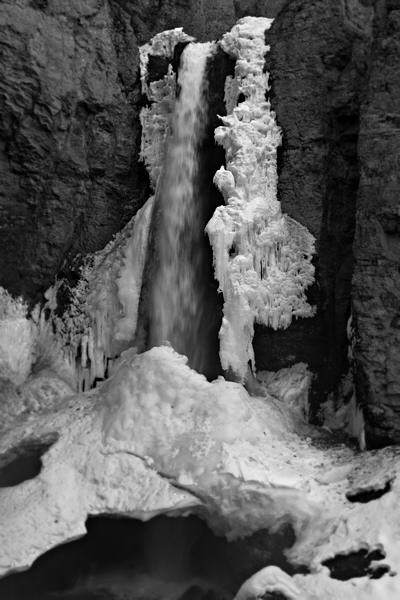
D. Still and Falling Water — I like the basic image, but it’s just not sharp enough for my tastes with regard to the Ansel type, in which case I like a diamond crisp image one that can go into a very large size.
E. Chirping among the Birds — This one almost made tier three, but it was not quite startling or stark enough to stand out as really unique. Still, a fine image. I’d be delighted to get such a shot myself and would consider it one of my better photos.
I. Steal this idea — Not quite as evocative as BW or not? But still rather exciting.
P. Stylistic Diversity — This was one that I thought was actually one of my drawings from the eighties that somehow resurfaced.
R. What else they might be — Problem is I have pictures just like this one. We see the same things just the same way a lot, Steve.
Tier three:
C. 41 Views — Funny, but I did a series of dirt piles too. I was attracted to their big mountain illusion. You achieved much better results that I did.
F. The Mystery of Things — An excellent photo, but just not startling or unique enough.
G. Twice told Tales — A bit a fog or mist for a little more atmospheric perspective could have turned an identical composition into a real knockout.
L. Four views of Bare Limbs — These bare limb foliage types have never rang my bell.
M. Photograffiti — I recall another of these I just loved, a real tier one… It had a little bit of Photoshop enhanced contrast to a figure in an parking garage. This is dramatic, but the graffiti itself is crap.
N. Quark’s Rabbit — Great conversation piece, but I wouldn’t hang it on my wall.
O. Three More Pears — Yawn. This type has never won me with photos, only drawing and painting.
Q. For Categories of Art — A fine photo, but I see this in real life almost every day.
Conclusion: I like to see things I do not ordinarily see; I like things I can not do myself; I like art that stimulates my imagination.
And I’m serious about buying some art. Email me if you like.
Hi Rex. Welcome back.
Steve, I don’t think I could do a tiered rating system unless I could move the images around, either the actual prints or thumbnails on a computer. That way I could look at them in groups, and say “these are group A, these are group B, etc.”. Having to scroll up and down and remember which tier each image is in doesn’t allow me to intuitively sense which ones are grouped together. But picking a few favorites is easier.
Ooooh, Rex, I like your style! And thanks for all the comments.
Since you ask, print prices are $25 for any size up to 8×10 on 8.5×11 paper, or $30 for up to 12×18 on 13×19 paper (size may be smaller depending on shape), plus shipping. And for now, 20% discount after the first. Naturally there’s a money-back guarantee. Mounting on board, matting, or framing are extra.
S. (and A.)
and raise your prices!
Steve,
Great. I’ll buy all four of the ones I liked at the ~8×10 size. You have a PayPal account?
They’re coming your way, Rex. I’ll send you a PayPal invoice. Thanks for the order!
Excellent Steve,
Now A&P is officially an e-commerce site.
Steve,
I feel that the context of this post allows for… an ambivalence.
Again, I need an edge!
D.,
my view is that different people have different roles on A&P. In this post, Steve introduced the interesting aspect of e-commerce.
Besides that, I see Steve as our cultured, intellectual, critical and sane voice who keeps A&P going in the face of tempests and absenteeisms.
My votes for rankings
1: K O S
2: A C D E F H I J M N R
3: B G L P Q
Brigit,
Schematic Voting and Blog Fame are merely sideshows to the complexities of making and viewing art. I would challenge any artist to reconsider such fleeting directives.
And I challenge Steve because, like you, I respect him so much.
Hmmm, context and edges. Maybe the following will provide some of both.
The original idea was not about my selling anything, but about the C’s hypothesis that blogging adds value to an artwork. Sunil and Karl addressed that with plausibility arguments, but there’s a lot more that could be said. One relevant data point: how are painting-a-day blogs faring sales-wise? Anyone have statistical or anecdotal information? Or other thoughts on this?
The second concept was the “wisdom of crowds” idea that a group can, under some circumstances, make better predictions than even the best informed and prepared individuals. It has turned out that some of my images garnered more consensus than I expected (notably E and P). That suggests that, to the extent I care about sales, I could push these a little more (P is not on my web site and E is less accessible), but who knows how these will do in the long run? Mainly, it was interesting for me to see the variation in people’s preferences. It really reinforces that I’m not necessarily a good predictor. And it nicely highlights the diversity of those who voted — I’m very glad we don’t all like the same ones.
A third idea that came into play was that of the collection/gallery/curation post, which I’ve been trying to explore in various ways. I’m not sure if having to select favorites (which I wouldn’t propose with a multi-artist collection) sharpens our evaluations much, but I think it can bring out unsuspected commonalities both within one person’s preferences and between people.
Maybe the edge is lacking because I’m not actually taking a stand or drawing a conclusion on any of these ideas? Well yes, the post is more exploratory than definitive. The unknown is the more interesting to me.
Crossed posts there… Thanks for the input, Nina! Birgit, I’m putting you on my resume as reference. D., I strongly agree, though a number of A&Pers also care about the economic side, which can be important, depending on the individual situation.
Besides that, I see Steve as our cultured, intellectual, critical and sane voice who keeps A&P going in the face of tempests and absenteeisms.
Now wait a second, if Steve is the cultured, intellectual, critical and sane voice, where does that leave the of us?
As for absenteeisms, that implies that there is some sort of obligation to blog here, which there is not. I’m very happy with the holiday I took, thank you very much!
A good tempest, we haven’t had one of those in a while . . .
D.,
There is an “edge” in Quark’s Rabbit, if I understand what you mean by “edge” (which I probably don’t, I admit)
Karl, instead of absenteeism, I should have stuck to my original word ‘truancy’ to make it clear that I was joking. On A&P, your job has been to be provocative.
The only person who realized that the first two pictures were part of the series is Nina.
Rex (leaving out A and B, please correct) and Nina were the only ones to rank by tier. I have followed their lead and here is the new graph:
Steve, I hope that I can get 8×10 photos of ADEFHP. If yes, please send me the invoice.
Some photographers (and maybe printmakers?) use a system whereby prices go up incrementally as an edition is depleted
Steve,
What is the size of these editions of these photos? David argued some months ago for open editions, I believe. A limited number would seem to be more attractive from a collector’s standpoint.
Birgit,
I think your earlier plot was easier to understand. But if I do understand it, it suggests, that the more popular images are not necessarily people’s individual favorites, is that right?
I don’t see it as my job to be provocative, but I guess it comes naturally. I also think ‘provocative’ is the kindest word you could choose, so thank you.
Steve,
“The unknown is the more interesting to me.”
I agree, but being more specific can make what is unknown even more central and interesting. Otherwise, we are merely a satellite.
As Rex said, Tier 1 photos are where I put my money.
In other words, the red bars in the histogram indicate the pictures where the 3 of us have and would put our money. Tier 2 and 3 photos are either the type of photos that we, as artists, have taken ourselves or that we favor less.
D.,
So could you be more specific about the edge, please? Can you give an example of what would constitute an edge for you in this topic area?
Birgit,
Your last graph looks incorrect, at least for some images. I’ll make one like your first when I have a chance, counting 0.5 for a second tier vote and 0 for third.
Steve.
From “Handshake Drugs”, a Wilco song:
It’s okay for you to say what you want from me
I believe that’s the only way for me to be
exactly what you want me to be.
D.,
Either I completely misunderstand you or you completely misunderstand me. Where’s Epimenides when we need him? Or Joseph Heller?
Steve,
Tomorrow, from work, I will give you my tiered response
Birgit,
That’s fine if you want, but there’s no need. I like that the group settled on an easier system (thanks David!). As usual, I’ve learned a lot.
The edge is who we are.
D.
We cannot all be edges. Some of us have to be bridges.
D..
From “Uncertainty,” a song by the Ensemble D’Urbin:
I am quantum mechanical.
I have no sharp edges where
You may find me or
Not. The one place I will never be is
Exactly where you want me to be
Or exactly anywhere else. Sorry, it’s
Heisenberg’s fault.
Okay.
Per Birgit’s request…
A (Title Unknown) — This reminds me of the California central valley where I grew up. A lot of Octobers or Novembers. A quiet, non obvious beauty with a sense of mystery added by fog. Lovely, but something I know too well to be a window on other worlds and visions that I so desire in other people’s art, so tier two.
B (Title Unknown) Architecture. Ugh. But Marvelous color chiaroscuro. Technically impeccable — a characteristic of Steve’s work in general — but not my subject matter, so strictly on personal bias tier three.
Oops, I forgot Karl’s question on edition size. For all of my work to date I’ve set 50 as the limit. This is larger than traditional high-class photography editions, but smaller than many non-photographic print runs. Yes, collectors, be the first to buy now and you can own the world’s entire supply for a mere $1005!
There’s a reasonable case to be made for having no edition limit — there’s certainly no technology issue as in some other forms of printing — but I don’t think I’ll be regretful if any images sell out. I’ll just go back and try to take a better one.
Okay, here’s my take:
Tier 1: A, F, H, K, O and R
Tier 2: D, J(B&W) and P
Tier 3: B, G, and S
Mel,
Thanks! It’s especially gratifying to see K and O getting a little respect, after they were shut out in the early going (see comment 14).
Steve,
I think it is a great idea to simplify the graph by counting 1 for tier one and 0.5 for tier two and O for tier three. But let us wait a while until we get more data.
My response is:
Tier one: A, D, E, F, H, P.
Tier two: B, G, J, M,N, R, S.
Tier three: C, I, K, L, O, Q.
Tomorrow, from work, I will give you my tiered response
From work, I give a tired response :)
You might have tried to restrain yourself on that one.
Karl: David argued some months ago for open editions, I believe. A limited number would seem to be more attractive from a collector’s standpoint.
There are two different sets of considerations here.
I do think that collectors of multiples prefer limited editions. My objection is that, with modern technology, the only reason for an edition limit is to deliberately create scarcity.
There used to be a practical reason that editions were limited. The image on the plate/stone would break down after repeated runs. And prints were handprinted (including photos) so each one required human work.
With digital printing, once you’ve got your printer calibrated and an approved proof, all you do is push a button and tell the printer how many copies you want. Any edition limit, in this case, seems contrived. It’s kind of like when Jack Duganne coined the word Giclee in order to make inkjet prints seem more special (I refuse to call them that). There are possibly market reasons for making limted edition Giclees, but the technology, for me, is more appropriately used for making open edition inkjet prints.
Birgit: different people have different roles on A&P….I see Steve as our cultured, intellectual, critical and sane voice…
Steve: (to David) You might have tried to restrain yourself on that one.
But Steve, then I wouldn’t be fulfilling my role :)
Just beware the editr.
David,
I think the question of editions can be an interesting one. The thought that went into my choice was pretty minimal. You’re quite right that, with digital photos, the scarcity is artificial, but is that a bad thing? Not to suggest any comparison, but I find the impact of, say, an Ansel Adams photograph is much reduced by the plethora of calendars, etc out there. But long before that stage, I feel that as an artist, I don’t want to be too represented by any one image. I want to let them do however they do and then let them go. If making money is the goal, I’d rather try to make a similar but new photograph. Sure, there may be special circumstances that can’t be repeated, but mine don’t generally rely on that, and anyway I’d rather have made something special and scarce than print it over and over. At least that’s how I’m thinking now. I really think the world will manage without print #51. :-)
Birgit,
Since you’re keeping track, I have another favorites choice to relay from anonymous: E, F, and Q.
I need an edge!
—-
The edge is who we are.
If I understand correctly –always a question! — D. would wish the photos to say something more (specifically, directly) about me the photographer, or perhaps about us as a society. Though either or both are worthy aims, I don’t think that’s what my photos are about. It is inescapable that implicitly, indirectly, they are about me/us, but more immediately they are about the world and how I find it. I want to bring the viewer into relation with some aspect of the world and let them take it from there, possibly seeing something that I did but barely sensing my intruding presence. To me this is antithetical to the relationship expressed in
It’s okay for you to say what you want from me
I believe that’s the only way for me to be
exactly what you want me to be.
I don’t want to tell viewers what I want from them, nor do I want viewers who tell me what they want from me. If for no other reason than that I can’t even say what I want from them. That edge simply isn’t there.
Steve, as viewers we get to see the world through your eyes. Your audience will consist of people who are engaged by what you see.
Steve/David,
Forget edge. What about a Momentum?
Geez, I thought I was the physicist here… Just because Heisenberg allows my momentum to be rather precisely defined if my position is very poorly defined, doesn’t mean that it has to be. It depends on the state I’m in.
Considering momentum as involving mass, speed, and direction, I’d have to say that my artistic mass is low, my speed erratic, and my direction indecipherable from the sample provided here. Remember, this is not necessarily my better work (though I like a few), nor are the images in chronological order.
The question is important, but I think the first real data we’ll have to go on will be what I come back with from the Four Corners photo trip I leave on in a week. I’m hoping my pictures will look different from last year’s, but I don’t know how or how much. I have a few ideas, but I’m making no predictions. One thing on my mind, thanks to D. and David, is tangents. I’ll try to keep my eyes open for little waterfalls and crows.
Steve,
This post was too much for me to get my mind around, so let me add congratulations to the pile. And I hope the momentum doesn’t take you over the edge. I mean, Birgit calling you the “cultured, intellectual, critical and sane voice” could ruin you forever. Not to mention all the high-falutin’ mentionings — Heisenberg, Epimenides, Heller, and lyrics from (to me) obscure erudite songsters.
June,
At some point a post collapses under its own weight. If there’s anything of interest left in the debris, perhaps it will be taken up in a later post. But before I make my escape, I’ll just add that the C has selected 6 of the images for prints. Which they are must remain a secret, but I can say that they were not simply the most popular.
My, what a long thread!
But I just wanted to do a follow up. I received the photos I ordered in the mail today, and may I say, “Gorgeous?”
Steve, you are right about the Epson paper. Splendid.
And to everyone, these photos are much better in real life. Fine printing. Diamond sharp. I am very, very pleased.
David,
Limited editions seems to work well for money, why not for art?
Karl, if you set the edition limit as high for artwork as it is for $100 bills, it’s unlikely you’d ever get close to selling out the edition.
Of course, you could create one-of-a-kind currency, like Boggs, but he keeps getting arrested, so you’d be taking a chance.