[ View menu ]

Monthly Archive August, 2007

Choosing your view (or Naming Your Poison)

Posted by June Underwood

August 31, 2007 5:00 am

I’m just back from a pleine aire, oil painting workshop and it seems that my topic — to paint in the middle in the muddle or to recollect in tranquility — has arisen again on A&P. Hi Sunil…..

Obviously I’m fascinated with the immediate ambiance as much as I am with the final product. The milieu from which I just returned, however, had its problems. The big one was the lack of focus within the landscapes we were asked to paint. So the topic of the day is — how do you find your viewpoints and hold them? Continue reading Choosing your view (or Naming Your Poison)

Thoughts on painting from photographs

Posted by Sunil Gangadharan

August 30, 2007 8:33 am

Karl recently mentioned here that he prefers (and revels) painting in the context of his reaction to his surroundings. He averred to say that a photo of the landscape would not do justice because 

“Photographs record what a place looked like at a particular moment. They don’t record what it felt like to be there” 

My personal experience is a little different. Continue reading Thoughts on painting from photographs

In Progress (guest post by Tree)

Posted by Steve Durbin

August 29, 2007 12:03 am

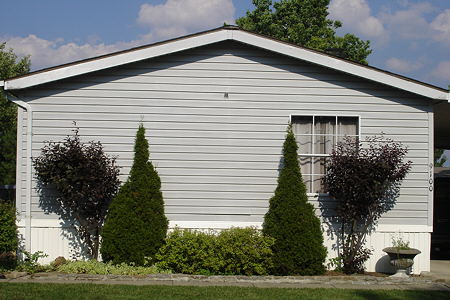
71407-023-450.jpg

I’ve been working on a series of photographs of the homes in my neighborhood. This project started after about three years of walks with my dog at different times of the day and encompasses a whole gamut of thoughts and feelings that I’ve had towards my home.

The more I saw the same things every day, the more meaning all of it took on for me until I had to get my camera and take photos. I suppose there’s a lot I could write about but I want to focus on two ideas regarding this project:

Continue reading In Progress (guest post by Tree)

New project

Posted by Steve Durbin

August 28, 2007 9:15 am

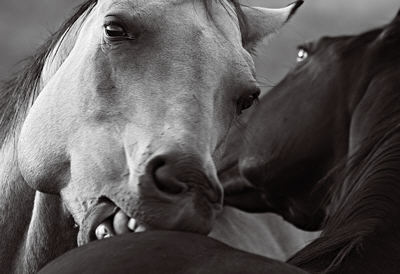
Now for something completely different from my usual inanimate landscapes. Probably almost every photographer in Montana has done horses at some point. They were actually a major subject of my first photos when I started up with digital photography, and starred in my first self-assigned project (not on the web site; I guess it’s still in progress). But they were eventually neglected as I mostly pursued my long-term interest in landscape and abstraction. Then I saw some postcards of the Horse Nudes portfolio of Kathe Lesage and realized what I’d been missing. Last weekend I had a chance to do something about it.

Continue reading New project

Why paint outside instead of from a photo?

Posted by Karl Zipser

August 27, 2007 8:29 am

A photograph offers so many (and so obvious) advantages as a source for painting as to raise the question: why would any responsible person even consider painting a landscape outdoors?

I’ve been thinking about this while painting outside lately. I think the answer comes down to this: I need to ask, what is it that I am painting when I paint a landscape?

Is it the landscape?

Or is it my being there, my reaction to the landscape? Continue reading Why paint outside instead of from a photo?

Fall-off

Posted by Birgit Zipser

August 24, 2007 1:00 am

The dunes have a fall towards the Great Lake that is difficult to capture in its full steepness.

Below a raven and crashing wave:
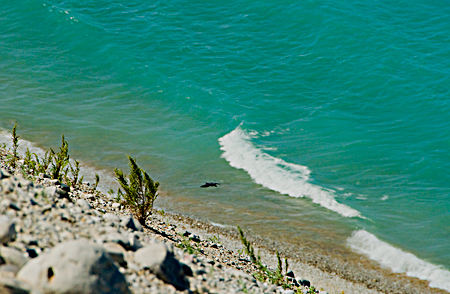
fall-off01.jpg

A few feet away from the edge:

fall-off02.jpg

Less than a 45 degree angle:

fall-off03.jpg

Study of perspective and color.

Color and oil paints - I

Posted by Sunil Gangadharan

August 23, 2007 7:31 am

Color is a difficult thing to get your arms around. In fact I think one could spend a whole lifetime trying to understand this facet of art and become proficient in only a miniscule percentage of the approximately three million degrees of color difference that the untrained human visual cortex could distinguish easily. On the canvas, getting the right overall value of a particular hue such that the harmony of the whole remains preserved is rendered even more difficult given the reality that most oil paint companies make a maximum of about 60 unique hues of differing chromaticity. As I trudge through the long stairwell leading to my color nirvana, I have realized that there are two ways of approaching and understanding it. The approach is a bit dichotomous, but it seems to serve me well. Continue reading Color and oil paints - I

Breaking up is hard to do

Posted by Steve Durbin

August 21, 2007 9:02 am

plums-quad-4501.jpg

In my current studio phase I’ve been experimenting with an idea that goes back a while, but was most recently brought to life by a show I saw that included the painter Michael Haykin. I’ve been wanting to find a way to combine images in a way that yields something that is more than the sum of its parts. Probably most artists have considered making a Cubist-like multi-perspective image, but as June found out in her struggle to make Cubist biscuits, it’s not at all easy. I certainly haven’t had much success myself, but this time around I do feel I’ve learned something that will affect future work.

Continue reading Breaking up is hard to do

Art and integration — or, why artists don’t paint the blur

Posted by Karl Zipser

August 20, 2007 11:29 am

blur-near-far.jpg

Last week Steve pointed out that a lens-based optical system like a camera or the eye can only focus at one field of depth at a time — meaning, as some sample images he presented illustrated, that other parts of the scene will be out of focus. The images Steve presented were of a landscape. In one image, some plants in the foreground were in focus, whereas a distant mountain was a blur. In the second image, the mountain was in focus, the foreground a blur. [Here I have combined them in one image.] Why, Steve asked for the original images, did painters — at least before the invention of photography — not paint the blur like this? More generally, why don’t artists paint what they see? Continue reading Art and integration — or, why artists don’t paint the blur

Knowing when to take a break from art

Posted by Karl Zipser

August 19, 2007 3:47 am

Sunil’s post Art, life: Separate or unified? raised the issue of whether an artist should try to be an artist all of the time. I commented that doing art requires intense observation and sensitivity — which is obvious. What is less obvious is that observation coupled with sensitivity are another way of saying “emotional reactivity.” That is, an insignificant input — the curve of a leaf — can cause a disproportionately large emotional output (that looks beautiful!!!!!) which, coupled with the act of painting, allows the artist to make the brushstroke that the moment requires.

Emotional reactivity is essential for making art, but out of the art-making process, it can be annoying, disruptive, counter-productive. The soldier and the policeman are trained not to have emotional reactivity, but the artist needs to develop it, harness it. The challenge for the artist it to be able to switch it on and off at the right moments.

There are the simply structural solutions for getting out of the art mode: don’t go to the studio on off-days, turn the pictures to the wall. The psychological solutions are more subtle: don’t think about that difficult painting or series at the wrong moments.

What do you do to take a break from art? Is it easier to get into “art mode” or to get out of it?

States of Altered Consciousness

Posted by June Underwood

August 17, 2007 5:00 am

lascauxpaintedgallery.jpg

David Lewis-Williams in The Mind in the Cave and Inside the Neolithic Mind postulates that religion has its origins in hard-wired brain functions he calls “states of altered consciousness.” Among these altered states are the hypnogogic (just prior to and awakening from sleep) as well as states induced by consciously chosen activities, for example, rhythmic dancing, meditation, and persistent highly rhythmical sound patterns. And then there are the other well-known states, whether chosen or inflicted, that alter consciousness — ingestion of psychotropic substances, intense concentration, fatigue, hunger, sensory deprivation, extreme pain, migraine, temporal lobe epilepsy, hyperventilation, electrical stimulation, near-death experiences, and schizophrenia and other pathological conditions (Inside the Neolithic Mind, page 46).

These states of consciousness, combined with homo sapiens’ ability to remember the visions that occur in such states, says Lewis-Williams, account for the rise of religion, some social organizations (primarily religious hierarchies), and the early paintings and art found in western Europe at places like the caves of Lascaux well as in the Near East around the upper reaches of the Tigris-Euphrates, Jordan, and Turkey. Continue reading States of Altered Consciousness

Art, life: Separate or unified?

Posted by Sunil Gangadharan

August 16, 2007 7:27 am

I had the good fortune to go to a very good group show at the MoMA recently with the provocative title ‘What is painting?’. One among the many works that I ran into was by a lady artist of the 1970’s Lee Lozano. Not having studied at art school, I did not know much about her (well, I did later find out that she really is not a household name) until I came back home and read up a little bit about her. The more I read, the more I was fascinated by how she had managed to integrate art and life into a seamless whole. From reading, I surmised that her desire for painting went beyond the confines of the canvas and she tried through her art/life to incorporate the viewer and her life in a strange union.

Continue reading Art, life: Separate or unified?