[ View menu ]

art and economics


Human Form

Posted by Birgit Zipser

May 23, 2008 6:51 am

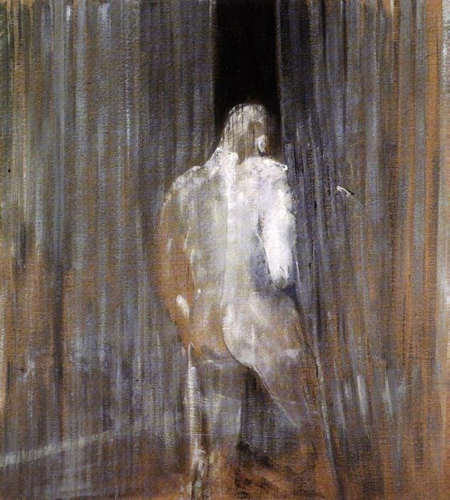
A Francis Bacon, according to an ad from Artprice in ft.com on March 31, 2008, fetches more money than a Rothko.

Here is a Bacon entitled Study from the human bodybacon.jpg

Contemporary artists also paint human anatomy. David Palmer paints human subjects engaged in movement. Jacob Collins paints human subjects more traditionally as stationary form.

A New York City dance group, the Ailey II dancers, enjoy popularity.

aileyii_dancers.jpg

Body culture is rampant in the U.S. No longer just aimed at fitness, it advocates mindful movement. Amazon.com offers books such as

bodyculture.jpg

Is there a renewed interest in the HUMAN FORM? Will such painted human form express functional anatomy, mindful or any other kind of movement?

Le Géranium

Posted by Birgit Zipser

May 11, 2008 6:21 am

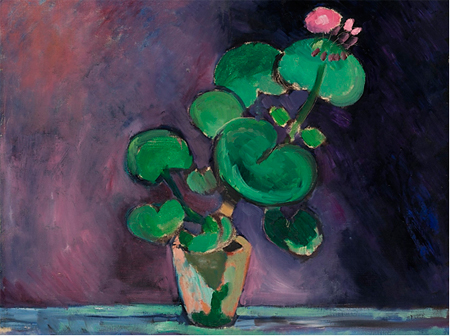
Please help characterizing the genius of Henri Matisse’s painting from 1910.

matisse.jpg
Le Géranium made news because of its high price at a Sotheby’s auction on May 7, 2008.

Saving my screenshot as ‘for Web and Devices’ made the colors more brilliant. Has anyone seen the original? How bright are the colors?

Support the Arts – Turn Off Your Television

Posted by David

November 13, 2007 1:45 am

wga2.jpg

I assume most of you have heard about the WGA (Writers Guild of America) strike. I’m not sure how much attention it gets in other parts of the country (or the world, for that matter), but here in Los Angeles it’s a big story. This is after all an entertainment industry town, and the effects of the strike can be felt in every part of our local economy. My wife is a writer and a WGA member, as are many of our friends.

The strike has come about because of a disagreement between the corporations who own the movie and tv studios and the writers who create their content over how much, if at all, the writers should be compensated for their creative work. The writers contend that they should be getting a slightly larger share from the sale of DVDs of the movies they wrote. From the sale of a $28.95 DVD, the writer of the movie currently gets 4 cents, or as comedian Tim Kazurinsky points out, that ’s 4 cents out of 2,895 cents. The writers are asking for 8 cents.

But a bigger issue, and possibly the main one, is that the networks and studios want to pay the writers nothing, that’s ZERO $, for tv shows and movies that they (the corporations) post on their web sites. The corporations claim that these streaming videos are “promotional”, and that they shouldn’t have to compensate the writers for posting them. But these “promotional” shows have commercials, just like any regular tv show, and are a huge source of income for the studios. They just want to keep it all for themselves.

As Mark Harris notes in his Entertainment Weekly Online column, “Why the Striking Writers Are Right”:

“The problem with this position is that writers deserve a share of revenue for material they help to create. Not a share only if the revenue is really, really a lot. A share, period. If it turns out that streaming video is a goldmine, then both sides will get a lot of money. If it turns out not to be, they’ll get less. Corporations are fond of reminding their employees that they’re all a ‘’family'’ during tough times. But when families sit down to dinner, Dad doesn’t get to say, ‘’I'm gonna eat until I decide I’m full, and then we’ll see if there’s anything left for the rest of you.'’ The right of a writer to earn money from work that continues to generate revenue cannot be dependent on how comfy studio and network heads are with the fullness of their own coffers.”

The studios are responding to the strike by showing reruns, and more reality and talk shows. But many of the more popular talk shows themselves will have to be reruns, since people like David Letterman and Jay Leno don’t come up with all those clever lines off the tops of their heads. They are created by a staff of, you guessed it, writers. To their credit, both Leno and Letterman are supporting the writers’ position in this dispute.

For the personal reasons mentioned above, and also on principle, as an artist, I’m siding with the writers as well. It seems obvious to me that the people who profit from the success of a creative product should include the artists who actually created it, not just the executives who made the phone calls and brokered the deals. I don’t watch a whole lot of tv to begin with, but until this strike is over I’m not planning on watching any. I’m going to vote with my remote, and say no to corporate greed. I hope many other people do the same.

==============

Here are a couple of videos about the strike that you might find interesting:
Tim Kazurinsky on WGN
the writers of The Office


Clyfford Still’s Ultimate Joke?

Posted by Richard Rothstein

March 18, 2007 6:00 am


The Arts section of today’s The New York Times examines the strange history and odd future of an artist considered to be one of the geniuses of the 20th Century and possibly the greatest of the Abstract Expressionists. Ironically, he remains–by design–virtually unknown to the general public and this despite the fact that he may have been even more prolific than Picasso.

For those of you unfamiliar with Clyfford Still, he is most certainly the ultimate manifestation of an artist’s contempt for commercialism, museums, galleries and collectors.  He is famous for denouncing the galleries and museums of the art world as Nazi gas chambers.  After a brief period of selling and displaying some of  his work, Still retreated to a remote farm in Maryland and spent the remaining decades of his life painting furiously, cursing critics and the commercial art world and hiding his work.  In a one page will he specified that his body of work could never be sold, never be separated, never be shown next to another artist’s work and could only be shown to the pubic in a Clyfford Still museum that would be built by an American city and would exclusively house his entire collection.

Continue reading Clyfford Still’s Ultimate Joke?

Art On-line Sales and Galleries

Posted by Bob Martin

January 18, 2007 9:10 am

This past Tuesday I attended a lecture and discussion panel with three gallery owners who talked about how they got into the business, what they see their role and relationship to the artist is etc. Someone in the audience brought up Internet sales and did they work with artist who also sold their work on line.

If you are currently doing both, selling via your website and through a gallery, what are the agreements that you have in place with the gallery? Do you sell certain types of work on-line but not through the gallery?

Technorati Tags: , , ,

What does it take to be a dealer?

Posted by Karl Zipser

December 18, 2006 2:54 am

Still life by Hanneke van Oosterhout, detail

Last Friday I helped Hanneke and Maurice set up the exhibition at Galerie de Provenier. While doing this, I started to ask myself, “What does it take to be an art dealer?”

Continue reading What does it take to be a dealer?

Art and commerce

Posted by Doug Plummer

December 12, 2006 11:49 am

I have made my living with a camera for over 20 years. Photography has been at the center of my life for perhaps double that time. Having the day job also be my creative life has lots of interesting implications.

My father prides himself on the fact that he has never taken money for his photographs. He started photography as a teenager, headed the local camera club, and at 83 he is conversant with scanner settings and monitor profiles. He is in love with the creative act of making images, and has never wanted to be hemmed in by the requirements and dictates of doing it at someone else’s behest.

It is a common solution to the dilemma of “whose work is this anyway.” There is a kind of purity in the amateur’s approach to any medium, and it is to be respected. Creative activity is an important piece of a well rounded life for many of us.

I chose a different course, because I was a really intense kid, and because I wanted no barrier between who I was and what I did. That said, it took a long time to accept that my creative voice was something I could rely on to be at the core of my livelihood. There was about a ten year period of scratching at the margins, trying to get a foothold in the profession, before it finally took hold. It wasn’t until I stopped trying to be a “commercial success”, trying to fit into a mainstream image of what my work should look like, and instead pursued the photographic vision that was most compelling to me, did I finally begin to achieve a measure of professional success and security.

There is an inevitable, and useful, tension between being a commercial photographer and being an artist trying to push against boundaries. My success as a commercial shooter is contingent upon replication–I am hired to do the same thing over and over. My economic life is dependent upon regular praise for it. But without my alternate life as an artist, pushing at new ways of seeing, the commercial work would lose its edge and quickly become stale.

I have always had personal work that I did just because I had to. I have a continuous photographic trajectory I have followed in that vein, things and environments I work on, processes I master, print quality that I value. That specific work is not what built my commercial career however. Clients don’t hire me because I can manage chaotic complexity in landscape photographs. Nonetheless, because I have my particular attentiveness to a photographic sensibility, and a relationship to my surroundings because of my camerawork, I can bring that to bear when the job is to fulfill a client’s need. It has more juice behind it, even if what I am hired to photograph has no apparent bearing on my personal work.

It means I can be both very attached to the manner in which I make photographs, be completely engaged in the situation and the way the photographs come about, while having no attachment whatever to how the photography gets used in the end. That’s what they pay me for—to stay out of the room where those decisions are made. I have a blast on assignment. I love being completely engaged on a job. I may like seeing the finished product in print, but I never think of that as the “real” work. It pays the bills, and keeps me in equipment and in frequent flyer programs. But it’s not how I identify myself in the end.

Art in Haarlem: artist and dealer Maurice Ploem

Posted by Hanneke van Oosterhout

December 9, 2006 8:01 am

dscn2776cropped-450.jpg

Maurice Ploem found the “official gallery circuit” to be empty and sterile, so he started his own gallery in his home in Haarlem’s Proveniershof.

dsc_0063-450.jpg

Maurice’s gallery, called De Provenier, is to the left of center in the photo above. Maurice wanted to provide exhibition opportunities to good artists who had not yet become “famous.” I had my first show here in the year 2000. I have another exhibition starting next week.
dsc_0037-450.jpg

Maurice works in a broad range of media — bronze, oil on canvas, painted wood. He says of his gallery: “Here one can see how work looks in a home environment.”
dscn2767-450.jpg

Above is an example of one of Maurice’s painted wood objects. He was inspired to make pieces like this when he was sitting by the fireplace on a cold December evening. He picked up an old piece of wood to throw on the fire. Looking at the object in his hands, he said to himself, “No, I’m not going to burn this.”

. . .
Does it make sense for an artist to show work in a gallery like Maurice’s, or is it better to stick with traditional galleries?

The Truth About Surviving as an Artist

Posted by Rex Crockett

November 11, 2006 5:49 am

This is an excerpt from something that looks like it will grow into a book, but right here, right now, I thought I would go directly to the heart of the subject.

I do not expect to win any popularity contests with this post. Truthfully, I am so far south of caring about that, I think new words would have to invented to describe my insouciance. As “posts” go, it is long, but I barely scratch the surface of the topic.

I can think of a great number of reasonable objections to what I say here. I doubt I’ve heard them all.

But let me say this. I know that for many people, doing art is not about money. Money is no true measure of success. Success is a multi-faceted jewel. Pride. Self fullfillment. Joy of creation. These are worthy. I honor anyone’s right to pursue their craft on their own terms. There are certain forms that are simply not economically viable. Artists who work in those form know that. They continue out of love, and truthfully, I love them for it.

But this post is about making money at art. It’s about making enough money at art to do only art.

Surviving as full time artist is a worthy ambition. I make no defense of that goal. It needs no justification. No explanation is required. None will be offered. It has always been my ambition to live through my art since the first synapses of my mind ever fired. I am by nature a type who must be self employed. Factually, by actual experience, I would rather die than fill out another job application.

I’ve made tons of money in other ways than art, however. I’ve made it doing things that made me sick to my soul, like pretending people needed college in order to be educated, only to see them betrayed by a market which had no place for their skills; rather, their lack therof. I am not a person who is impressed by degrees, rank, position, reputation, or money. I like money. I like the things money can buy. I like fast cars and motorcycles. I like vacations to the islands and long trips in yachts. I like to race horses on mountain paths. I like dining with crystal and dancing till dawn wearing seven thousand dollars worth of clothes, but money is not the measure of a man or a woman. I’d just as soon wear a t-shirt and blue jeans and dig in the dirt as sit in another gods forsaken boardroom and watch another boring brain fart of a Powerpoint presentation.

In this post, though I could not resist “insouciance” above, I have purposely kept the language simple. In fact, as I wrote, I kept in mind the vocabulary and attitude of a bright and rebellious teenager. This is stuff I wish I studied when I was sixteen instead of all the artsy fartsy theory I was discovering then.

How to Make a Living as an Artist

It’s not enough to be good. There are plenty of good artists. Continue reading The Truth About Surviving as an Artist

How is an Art Patron different from a Gallery Consumer?

Posted by Karl Zipser

October 11, 2006 3:00 am

The difference is evident in the artworks (e.g. paintings) that they buy.

An art patron:

  • causes an artwork to be made that would not otherwise exist
  • has a direct influence on the content of the artwork (and thus on the creative process itself)

In contrast, a gallery consumer:

  • selects a ready-made artwork
  • has little or no impact on the creative process

Anyone with money can buy a ready-made artwork. But to be an art patron requires more than that. Besides money, an art patron must have

  • a good idea of what the artwork should be about
  • discernment to select the best artist for the job
  • patience and persistence to deal with problems, delays, and drama that accompany any serious artistic project

Being an art patron is difficult. It is something of a lost art in itself.

The gallery myth

Art is sold in galleries along with a myth:

Art should be created for the sake of art.

This phrase is inherently meaningless. A painting is an inanimate object. The person who buys it does the appreciating.

The gallery myth runs counter to the interests of both the artist and the buyer. This is evident when one considers the economics of making art.

When an artist works for a patron, the goal is to please a real person, and get paid for it. This is a well-defined goal. It gives the artist a focus for creativity, and the assurance that creativity will be rewarded.

When and artist creates works to sell in a gallery, the goal is to please an imaginary person, a stranger who might buy a picture. How does one please an imaginary person? This goal is not well-defined. Creative energy gets wasted in guesswork. The artist, through uncertainty, makes many pictures — hoping some of them will sell.

Galleries incline the artist to a mass-production approach. Mass production is fine for blue-jeans. It is inefficient for artwork made by an individual, where the goal is to be creative and produce something unique and of high quality.

I believe that the gallery myth is a good part why painting has fallen into such a sorry state: the link between the artist and buyer is broken by the gallery. This alters the economic relationship and puts the artist into an awkward mode of production.

And of course, the buyer, in the role of gallery consumer, must settle for something not made specifically him or her.

Escaping economics?

Is it impossible for an artist to create what he or she really wants to create? Must painting be done either for a real patron, or for an imaginary customer?

Of course there is an alternative: an artist can paint for himself — if he can afford the time to do so. He is then his own patron. He does not paint “for the sake of art”, but for his own sake. Perhaps this is the best way to make great art.

And yet, there are some problems with an artist being his own patron. The artist gains creative freedom, but at a price. A regular patron can provide meaningful constraints in the form of:

  • specifications for subject matter
  • deadlines
  • payment

These three constraints are lost when an artist acts as his own patron. The purpose and content of the work can continually change or evolve. The painting may never be finished. The artist cannot meaningfully pay himself for his work. He spends his time, he gets a picture in the end if he is lucky. But there is no money involved.

If the artist has the money to be able to afford to paint for pleasure, he also can afford to spend his money for easier forms of pleasure — like vacations. Thus, a rich artist will have a lot of distractions from the hard task of painting — and good painting is very, very difficult. A poor artist, on the other hand, will starve if he spends too much time acting as his own patron.

If the goal of making an artwork is to produce something that will satisfy a buyer, then the artist/patron relationship, unhindered by the gallery, can be the best way to fulfill this goal. Being an art patron is not easy, of course. But who said art should be easy? Whereas the gallery consumer makes a selection, the art patron is involved in expression. Here is the ultimate difference; the artwork will reflect this.

(I would like to get critical feed-back on this piece)
first posted 28 March 2006

What do students want from an art education?

Posted by Karl Zipser

October 9, 2006 3:38 am

Simple: to learn how to make a living as an artist. Art school education, no matter how stimulating, cannot be considered complete if the graduates need to seek other employment in order to support part-time, non-profitable art making.

Of course, the question of “how to make a living as an artist?” is not trivial. It brings together two things: 1) being an artist, with all the personal expression and integrity implied; and 2) how to live from this. Combining 1) and 2) is a serious topic for research. This should be one of the functions of an art education — to do research into how to sell art.

If how to sell art? is a mystery, then finding the answer will be as exciting as solving any other important problem. Advanced education is not only about learning, but also discovering what is not known.

The only problem is, if art schools could really fulfill their mission, they might loose their faculty — the professors would likely go off and do art full time.

This post was inspired by Bob Martin, who is on the board of an art school and commented “I would be very interested in learning what artists want from a school and an instructor.”

What do you want from an art school and instructor?


[Thanks to those of you writing the great comments, David Palmer in particular, for giving me insight into the art school education, where it succeeds and where it fails.]

So you want to write a book about art? Interview with Lisa Hunter

Posted by Karl Zipser

September 14, 2006 3:00 am


I want to expand my blog Art & Perception as a book. Lisa Hunter, author of The Intrepid Art Collector, gave me some excellent advice. [Note, this post was written before Art & Perception became a group blog]

Karl Zipser: We bloggers write what we want to write and act as our own publishers. When you want to publish a book, how does this affect what you can write about?

Lisa Hunter: Writers don’t like to hear this, but commercial publishers really want evidence that the book will sell. They’ll want to know if the author has a “platform” (i.e. whether he/she gives seminars, has a TV show, writes a syndicated newspaper column, etc.) They’ll also want to know what the readership demographic is, and what opportunities for PR exist. And they’ll want a “competition analysis,” which lists all similar books and explains why this one is different or better. At big commercial publishers, the marketing people can be just as important as editors in deciding what books to publish!

Karl: Are books about art a special case with respect to publishing?

Lisa: A major factor with art books is how expensive they are to produce. Color illustrations raise the printing costs substantially (and this is on top of reproduction rights fees.) Oftentimes, a book proposal is shot down because the book would cost so much that few people would buy it. I know this from personal experience. Recently, I had a great idea for a coffee table book that several editors loved, but no one could see how it would be profitable. Sigh.

Karl: Tell me about the writing process itself. Did you write your book first and then look for a publisher?

Lisa: Non-fiction is unique, in that you don’t have to write the book until you have a contract with a publisher. Acceptance is typically based on a proposal, outline and sample chapter. An agent who believes in your project — and who knows what publishers are looking for — is a HUGE help in getting editors to take the project seriously.

Karl: So you get the agent and editors to believe in you with a great proposal, etc, and then . . .

Lisa: Of course, once you have the contract, you actually have to write the book, and if you’ve never written anything 300+ pages before, that can be intimidating. When I was writing The Intrepid Art Collector, I was lucky because the chapters were all stand-alone. I could work on them one-at-a-time, as if I were writing magazine articles. After a while, I had my 80,000 words. For a more narrative type of book, an outline is critical to stay on track. And when writer’s block and deadlines build up stress, I recommend chocolate.